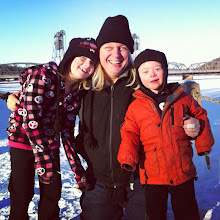
It may be worth noting that Joseph Ratzinger had personal experience of the Nazi approach to "rejects." A cousin with Down's Syndrome, who in 1941 was 14 years old, just a few months younger than Ratzinger himself, was taken away by the Nazi authorities for "therapy." Not long afterwards, the family received word that he was dead, presumably one of the "undesirables" eliminated during that time.
Showing posts with label christianity. Show all posts
Showing posts with label christianity. Show all posts
Wednesday, April 16, 2008
The Pope and Down syndrome
I am not a Catholic and know very little about Pope Benedict XVI, but came across the following while reading up about his visit to the US:

Monday, April 07, 2008
Walk the line
Rainy day yesterday. Silvi and I went out for breakfast together while Annie and Ian chilled out; Annie's chin deep into a Murder She Wrote marathon on Netflix Instant Viewing. I spent much of the weekend revamping my business website, making it more corporate (gack) and minimalist. A bit embarrassed by the *yawn* booooring videos I've put up as samples, but - that's all I's gots.
Also embarrassed by the cheesy Christian videos up there, but again... Man, I've made a lot of crap over the years. Sold out to the man. That's part of the reason I've started my own company, to create videos that I can be proud of and that won't come with a warning to not watch my videos late at night or before operating heavy machinery.
Lately, I've been working with a corporation on the side that is paying enough for me to invest some of the extra money into my own projects, which is pretty stinkin' exciting. (Thanks, Jim, for throwing the business my way.) I'm looking around for a writer for my philosophy video series; need to find someone who can walk the line between curriculum and documentary. So if you know anyone...
Speaking of walking the line, I'm delving into two books in my attempt to better understand, know, learn about, comprehend, find, discover what Jesus was like, who he was/is, etc. One book was written by an atheist, Jose Saramago and the other by an evangelical Phillip Keller. When Saramago, who wrote the killer book Blindness, published his novel - The Gospel According to Jesus Christ - it was renounced as heretical by almost everyone, Protestant and Catholic alike. Not hard to see why, since, according to Saramago, Joseph was the real daddy.
Keller, best known for his classics A Shepherd Looks at Psalm 23 and Lessons from a Sheepdog, is no doubt a fine writer, and more accurately reflects my own beliefs concerning these events, but, man, some of his book on the life of Jesus that I'm reading - Rabboni - is just downright cheesy. Stuffed crust cheesy. He's got Mary and Joseph sneaking lovey-dovey looks at each other, Mary not complaining (why add this interpretation) about riding - pregnant - on a donkey across the desert, Joseph a strapping tanned young man, etc.
That's why I have to read Saramago, a brilliant writer, in the other hand, to balance the story out. Same goes for a lot of other stories or books I read: If I'm holding Kierkegaard in one hand, the other hand's got Nietzsche.
Of course, I'm defaulting back to the original stories recorded by the Jewish writers of old to give me sure footing on this path, walking the line, struggling along the narrow ridge.
Also embarrassed by the cheesy Christian videos up there, but again... Man, I've made a lot of crap over the years. Sold out to the man. That's part of the reason I've started my own company, to create videos that I can be proud of and that won't come with a warning to not watch my videos late at night or before operating heavy machinery.
Lately, I've been working with a corporation on the side that is paying enough for me to invest some of the extra money into my own projects, which is pretty stinkin' exciting. (Thanks, Jim, for throwing the business my way.) I'm looking around for a writer for my philosophy video series; need to find someone who can walk the line between curriculum and documentary. So if you know anyone...
Speaking of walking the line, I'm delving into two books in my attempt to better understand, know, learn about, comprehend, find, discover what Jesus was like, who he was/is, etc. One book was written by an atheist, Jose Saramago and the other by an evangelical Phillip Keller. When Saramago, who wrote the killer book Blindness, published his novel - The Gospel According to Jesus Christ - it was renounced as heretical by almost everyone, Protestant and Catholic alike. Not hard to see why, since, according to Saramago, Joseph was the real daddy.
Keller, best known for his classics A Shepherd Looks at Psalm 23 and Lessons from a Sheepdog, is no doubt a fine writer, and more accurately reflects my own beliefs concerning these events, but, man, some of his book on the life of Jesus that I'm reading - Rabboni - is just downright cheesy. Stuffed crust cheesy. He's got Mary and Joseph sneaking lovey-dovey looks at each other, Mary not complaining (why add this interpretation) about riding - pregnant - on a donkey across the desert, Joseph a strapping tanned young man, etc.
That's why I have to read Saramago, a brilliant writer, in the other hand, to balance the story out. Same goes for a lot of other stories or books I read: If I'm holding Kierkegaard in one hand, the other hand's got Nietzsche.
Of course, I'm defaulting back to the original stories recorded by the Jewish writers of old to give me sure footing on this path, walking the line, struggling along the narrow ridge.
Tuesday, January 22, 2008
Big Bird vs. Goliath
 I'm revisiting some thoughts from a few years ago because I still haven't found an answer that is satisfying.
I begin with this question: How do I teach my kids about God? I know that Silvi and Ian will emulate me, which is a terrifying prospect. They'll learn about God first through my example. It's true, I love God deeply but the fact is, I often screw things up. And besides, I don't want my kids to love God as I do: I want them to love Him better than I do.
I've been wandering through the kid's sections of bookstores, looking at the religious books. It's a bit frightening, really. Children's Bible stories with pictures of everyone smiling the same sticky-sweet smile. I mean, come on, when David was walking around town with Goliath's head in his hand, I think more of William Wallace than of Big Bird. Of course, I don't believe that my two-year-old daughter will cuddle up with me at night while I flip through a picture book of Braveheart. And so I have a dilemma. Do I buy the Bible picture books with all the happy smiling prophets and lepers and warriors?
I drive my wife crazy with my penchant for focusing on minutia. But I really do think this matters. A lot. It's taken me a couple of decades to get rid of some of the religious baggage that caused me to walk around like Quasimodo. I know that it is impossible to prevent my kids from having a lot of their own misconceptions about God; it's part of living with limited perspectives. But I don't want to make Silvi and Ian's trek with God more tiring than it has to be. And I have to believe that a childhood of looking at pictures of real people of history like Moses and David and Solomon portrayed with pasted on Crest-white smiles has got to have some kind of an impact.
Maybe I'm making too much of this, or maybe it's "a guy thing." I can't really get into a bunch of smiling vegetables acting out the Last Supper. I did find a few books online at Eerdmans publishing that are at least artistically inspiring. Maybe that's the best I can hope for in a children's story book.
Friday, November 09, 2007
Stanley Harwuz...Hour...Hauerwas
 Last night I went to the University of Minnesota to hear Stanley Hauerwas, named America's best theologian by Time Magazine, present the Twelfth Annual Holmer Memorial Lecture.
Wait, wait, come back. Oh alright, go.
About half my readers just walked out of the room. For you remaining few, notice how much elbow room you now have? Spread out; make yourself comfortable.
I went to hear him because he is one of leading advocates for people with intellectual disabilities. For the past 40 years he's written many insightful books that reflect on the lives of people with disability, such as Down syndrome.
He emphasizes friendship and community, as well a life of service to others, as the primary dimensions of what it means to be human and to live humanly. (This, in my opinion, is the main weakness in the ethics of the philosopher Kant, who calls us to treat others as an end instead of means. While this is a good thing, but does not go far enough.)
 Last night he was giving a lecture on the role of theology in the university. I won't go into details about it here; he wrote a book on it if you're interested. In brief, he doesn't think theology should be taught as a discipline, but should serve learning by shedding light on how the disciplines are and are not connected. This, he says, must be accomplished without a return to Christendom.
OK. How's it going out there. I see one or two people are still here.
I think I've found a new favorite writer in Dr. Hauerwas. I went up to him afterwards and told him that I appreciated all the work he has done on behalf of those with intellectual disabilities. He seemed affable and gentle, although you wouldn't know it from his talk.
 One other thing. Stanley Hauerwas is an outspoken pacifist. Many of you know that I spent some time in the service about twenty years or so ago. Yup, that's me in my Army uniform, doing some jungle school training down in Panama.
I wish I had a few hours to talk with Dr. Hauerwas. I haven't solidified my thoughts on "just war" or outright pacifism, although I'm probably closer to Billy Carter than George W. Bush. I'm constantly torn between William Wallace and Mahatma Gandhi.
Well, I just saw the last person walk out the door.
Anyway, I went to hear a lecture last night. It was cool.
Monday, November 05, 2007
Trust, and a little OCD
 I probably shouldn't be blogging today: The first snowflakes are drifting down, the Vikings won yesterday and Britney Spear's scowl continues to make going through the checkout counter an irritating experience.
But I'm committed to writing each day this month (thanks a lot, Isabel). Oh well. Let's hope my self-censoring radar will kick in before I become inappropriately transparent.
I think one of the benefits to having good people in our lives is their ability to act as mirrors. Without Annie, I would probably consider myself to be a normal and well-rounded guy. I would think that it's perfectly sane to refuse to drink milk more than three days old, that everyone buys journals in bulk without writing in them and that reading for eight hours straight is a good way to improve my social life. (Who says imaginary friends can't make you happy? Try telling Calvin that Hobbes doesn't make him happy.)
Without my wife, I would also probably think that buying a new/used Bible every other week is a reasonable use of my pocket cash.
I used to buy lots of Bibles. Every translation I could get my hands on. NIV, The Message, NKJV, NLT, RSV, with and without cheese. I won't bore you with a list of them all.
I'm not very "religious," at least I don't think so. I pop into a traditional church service once or twice a year, I have no idea what to do when Lent rolls around and haven't the foggiest which side goes first when making the Sign of the Cross. I just try to mimic Jesus, like a little brother following around big brother, annoying the crap out of him (no offense, Luke).
I'm sure I would have annoyed Jesus. "Umm, Tom, it's cool you want to hang out with me and all, but I'm heading out into the desert for some alone time."
Anyway, I'm getting off track here. I knew I should have just posted more pictures today.
Over the years I think I've figured this Bible-buying compulsion thing out. It comes down to a matter of trust.
See, I just don't trust many "Christians." That goes for Bible publishing "Christians" as well. For instance, it's hard for me to read the English Standard Version translation because one of the professors on the translation team is friends with an organization for which I have a strong dislike. I struggle to read the New Living Translation because Pat Roberson likes it. (Sorry, Pat, I know everyone uses you as a whipping boy, but you bring it on yourself.)
Yeah, I know, like I'm Mr. Perfect. Shhh... I'm bearing my soul here.
I also don't trust advertising. Probably because I'm in the industry. I know how jaded and skeptical - and manipulative - advertising is prone to be. Walk down the religion section of any bookstore and look at all the brightly colored Bibles. Try not to think of the team of graphic artists and sales associates and marketing personnel and MBA's who helped put that Bible on the shelf. I used to tear the covers off of my Bibles because it bugged me so much.
Alright, so that last part is pretty weird. And I knew that before Annie told me so. But, hey, you're the one who's still reading about my warped sense of trust.
I suppose that I am still trying to find a Bible that is untainted by flawed people, although I realize that it's a futile search. It's just so hard to learn to trust, you know? My wife's helping me in that department. So are Silvi and Ian.
Stupid winter. Making me look like a freak in front of everyone.
Tuesday, July 11, 2006
Friday, July 07, 2006
Celtic Monastic Gathering
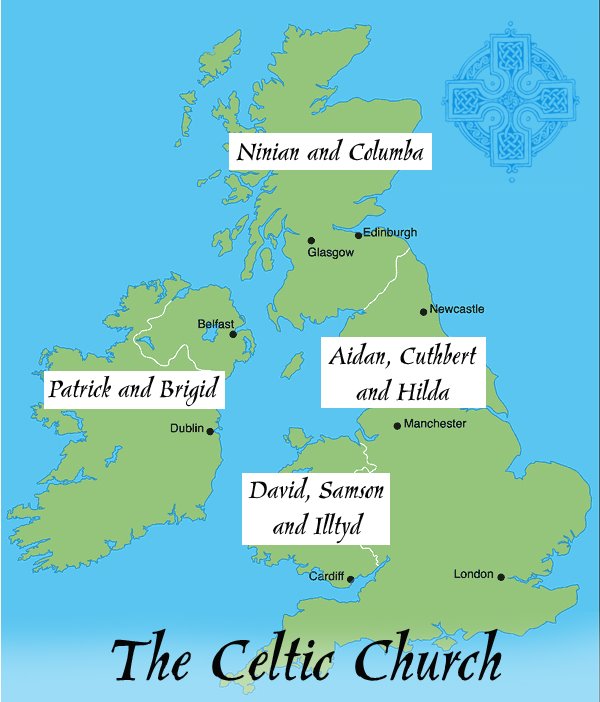
 This weekend I'm planning on attending the Celtic Monastic Gathering, sponsored by the Northumbria Community. As a descendant of both the Celts and the Vikings (who conquered and terrorized the Celtic people) I've oscillated between the gentleness of the Celtic traditions and the desire to grab the nearest Chieftain Sword and cut my way through the world. It should be an interesting weekend.
Thursday, June 15, 2006
Fun vs. "meaningful"
My experiences on the 48 Hour Film Project have given me a lot to think about this past week. Nearly twenty years ago when I was a freshman in college, I did a project on Christian vs. secular filmmaking. I proposed that most Christian films ... well, they came up short. Short on plot, short on character development, short on storytelling. "Message" movies. Ugh.
I'm a co-leader of a "serious" documentary discussion group. We meet in a church (much to my chagrin), and there is always a Christian element to the gathering. Prayer at the end. Looking for the spiritual element in the films. I like films that are open ended, that don't answer all the questions; the audience, from the comments I receive, does not. Truth be told, I rarely enjoy these gatherings.
Yet, I loved working on the goofy and campy 48 HFP movie. It had no message. It didn't try to solve the world's problems or answer deep philosophical questions. It was just a chase film with some pretty bad acting. But I had a blast.
I assert the following:
1. Most Christian filmmakers (cut from the evangelical cloth, that is) misunderstand the ending of the book of Job. Is the end of Job a "and they lived happily ever after" ending? I don't know about you, but my wife and daughter are irreplaceable. Job may have received many blessings from God, but do you think that there wasn't one day that he woke up and didn't think about the family that he lost?
2. Most Christian filmmaker's stories are more shaped by Jonathan Edwards, Matthew Henry and John Owen than by Matthew, Mark, Luke and John. Christian filmmakers do not write and shoot their stories in a vacuum. Their stories spring from generations of influence. I wonder what kind of stories would be told if American filmmaker's theology was shaped by Soren Kierkegaard or Jurgen Moltmann?
3. Most Christian filmmakers "light" their stories with a 18K Fresnel when they should have used a 650 Mini-Softlite. Do the metaphors candle or salt mean anything anymore? Stop shining the spotlight when all you need is a small fill-light. Perhaps God has given you a lot of light; but maybe your glaringly bright light is only blinding me, and it's washing out the scene. Put a dimmer on that puppy.
I'm a co-leader of a "serious" documentary discussion group. We meet in a church (much to my chagrin), and there is always a Christian element to the gathering. Prayer at the end. Looking for the spiritual element in the films. I like films that are open ended, that don't answer all the questions; the audience, from the comments I receive, does not. Truth be told, I rarely enjoy these gatherings.
Yet, I loved working on the goofy and campy 48 HFP movie. It had no message. It didn't try to solve the world's problems or answer deep philosophical questions. It was just a chase film with some pretty bad acting. But I had a blast.
I assert the following:
1. Most Christian filmmakers (cut from the evangelical cloth, that is) misunderstand the ending of the book of Job. Is the end of Job a "and they lived happily ever after" ending? I don't know about you, but my wife and daughter are irreplaceable. Job may have received many blessings from God, but do you think that there wasn't one day that he woke up and didn't think about the family that he lost?
2. Most Christian filmmaker's stories are more shaped by Jonathan Edwards, Matthew Henry and John Owen than by Matthew, Mark, Luke and John. Christian filmmakers do not write and shoot their stories in a vacuum. Their stories spring from generations of influence. I wonder what kind of stories would be told if American filmmaker's theology was shaped by Soren Kierkegaard or Jurgen Moltmann?
3. Most Christian filmmakers "light" their stories with a 18K Fresnel when they should have used a 650 Mini-Softlite. Do the metaphors candle or salt mean anything anymore? Stop shining the spotlight when all you need is a small fill-light. Perhaps God has given you a lot of light; but maybe your glaringly bright light is only blinding me, and it's washing out the scene. Put a dimmer on that puppy.
Thursday, May 11, 2006
Leadership, Life and Theology Institute
Solomon's Porch is hosting a Leadership, Life and Theology Institute next month. There are a few events I am interested in attending. (The Theology of Jürgen Moltmann being one of them. Reading the Questions: Interpreting the Bible with Hints from Derrida and the Ancient Rabbis also looks interesting.)
Thursday, April 13, 2006
Christians and Moretti?
Conservative film reviewers at Christian Spotlight endorse Moretti's 2002 The Son's Room. (while giving it a "somewhat offensive" moral rating.) Ultra-leftist Moretti and ultra-conservative film reviewers finding common ground? Has Moretti lost his edge?
"...it's too bad more believing Christian families don't seek out these kind of "art house" films instead of settling for the usual vulgar timewasters at the cineplex."
Wednesday, June 22, 2005
The passion of Nietzche
I received a gift certificate to a bookstore for Father's Day and spent a few hours trying to find a good book on the life of Jesus. There was no shortage of books, from Just give me Jesus by Anne Graham Lotz (Billy Graham's daughter) to This Hebrew Lord by liberal John Shelby Spong. As I wandered past book after book, I got more and more frustrated. Surely there was one book that spoke my language, the language of Miguel de Unamuno and Kazantzakis and Nietzche.
I don't want to read another book about atonement or justification. I don't want to hear about the historical accuracy of the synoptic gospels. I don't want to read more about Jesus the Berkeley feminist or Jesus the champion of the Nicaraguan Sandinistas. I don't want Jesus Freaks, The Jesus I Never Knew, Jesus CEO, or to Experince the Heart of Jesus.
Jesus of the suburbs. The suburbs are killing us.
I have yet to find a book with the same intensity of the gospels. Shusaku Endo's A Life of Jesus comes close.
Depressed and beaten, I reluctantly settled for N.T. Wright's Following Jesus. I respect and admire N.T. Wright and his sermons are alive and full of passion. I also bought a copy of Nietzche's classic, Beyond Good and Evil. A much-needed mirror to keep the suburbs at bay.
I don't want to read another book about atonement or justification. I don't want to hear about the historical accuracy of the synoptic gospels. I don't want to read more about Jesus the Berkeley feminist or Jesus the champion of the Nicaraguan Sandinistas. I don't want Jesus Freaks, The Jesus I Never Knew, Jesus CEO, or to Experince the Heart of Jesus.
Jesus of the suburbs. The suburbs are killing us.
I have yet to find a book with the same intensity of the gospels. Shusaku Endo's A Life of Jesus comes close.
Depressed and beaten, I reluctantly settled for N.T. Wright's Following Jesus. I respect and admire N.T. Wright and his sermons are alive and full of passion. I also bought a copy of Nietzche's classic, Beyond Good and Evil. A much-needed mirror to keep the suburbs at bay.
Wednesday, April 20, 2005
The wrong questions
I live in an age of wrong questions. Everywhere I turn, it seems those in charge are asking the wrong questions. Abraham Joshua Herschel says that philosophy may be defined as the art of asking the right questions. So what are the right questions when it comes to talking about community, about what it means to be the Church?
I'm more than a little hesitant about addressing topics like community and the Church. They're being talked about everywhere. The reason I feel like I want give my two cents is this: None of the answers that are in abundant supply in countless books, sermons, blogs, and websites answer the questions I am asking.
Can I trust you? Will you trust me?
There's a reason not many are addressing these questions. It's much easier to discuss theology, form and function, worship techniques. And those who do address the questions I am asking often provide ethereal, fluffy answers that don't touch me in my day-to-day life. I've got a little too much Charles Sanders Peirce in me to embrace Thomas Merton. I've got too much Merton in me to embrace Francis Schaeffer. I've got too much Schaeffer in me to embrace Jacques Derrida. And I've got too much Derrida in me to embrace, well, anything.
I hate my questions. So, touchy-feely. So, narcissistic. I want to be satisfied with sitting around talking about things like perichoresis and interpenetration and postfoundationalism. But I'm not. At least not right now. As the Church struggles to redefine itself, I, a branch on the vine, ask: Can I trust you? You, sitting next to me on the pew, on the thrift store couch, across from me in the coffee shop: Can I trust you? Do you trust me?
Trust is the springboard of love. And love is the greatest witness to our age. But if all this touchy-feely stuff is boring you, we could just talk about a great article that I read on theology and science without dualism.
I'm more than a little hesitant about addressing topics like community and the Church. They're being talked about everywhere. The reason I feel like I want give my two cents is this: None of the answers that are in abundant supply in countless books, sermons, blogs, and websites answer the questions I am asking.
Can I trust you? Will you trust me?
There's a reason not many are addressing these questions. It's much easier to discuss theology, form and function, worship techniques. And those who do address the questions I am asking often provide ethereal, fluffy answers that don't touch me in my day-to-day life. I've got a little too much Charles Sanders Peirce in me to embrace Thomas Merton. I've got too much Merton in me to embrace Francis Schaeffer. I've got too much Schaeffer in me to embrace Jacques Derrida. And I've got too much Derrida in me to embrace, well, anything.
I hate my questions. So, touchy-feely. So, narcissistic. I want to be satisfied with sitting around talking about things like perichoresis and interpenetration and postfoundationalism. But I'm not. At least not right now. As the Church struggles to redefine itself, I, a branch on the vine, ask: Can I trust you? You, sitting next to me on the pew, on the thrift store couch, across from me in the coffee shop: Can I trust you? Do you trust me?
Trust is the springboard of love. And love is the greatest witness to our age. But if all this touchy-feely stuff is boring you, we could just talk about a great article that I read on theology and science without dualism.
Saturday, April 02, 2005
Community?
Some friends I haven't seen in a long time stopped over last night to see Silvi. One of them is in the process of leaving his church of eight years or so. I say in the process because he still enjoys listening to the sermons, but he has no fellowship with the huge congregation.
He attended a conference in Colorado put on by Aussies Michael Frost and Alan Hirsch, where they spoke of their book, The Shaping of Things to Come. I'd never heard of the book, but I guess it's stirring the waters. My friend and I talked about it, about incarnational living, about this whole community thing. I enjoyed the conversation, but I woke up feeling very frustrated.
I just want to get there. Wherever there is. I've been actively deconstructing Church for nearly five years, and it is so old. Once, when I lived in Seattle, I spent a few hours sitting overlooking the Puget Sound with a prof. from Mars Hill Grad School. We talked about breaking out of the deconstruction circle. He believes that it is possible to break free, at least enough to find some rest. He said that what's often lacking is someone to come along side of us and say, "Psst. Look over here. Here's a small door you can walk through. And I'll go with you.
I feel like I've been walking through a lot of doors. Which one is the small door?And who will go with me?
But I digress into self-pity again. I just need to serve more, read my Bible more, pray more, be Missional. No, no. I just need to do less, allow God's voice to penetrate the silence, become less and less. Wait, I've done all those things. What's on tv?
He attended a conference in Colorado put on by Aussies Michael Frost and Alan Hirsch, where they spoke of their book, The Shaping of Things to Come. I'd never heard of the book, but I guess it's stirring the waters. My friend and I talked about it, about incarnational living, about this whole community thing. I enjoyed the conversation, but I woke up feeling very frustrated.
I just want to get there. Wherever there is. I've been actively deconstructing Church for nearly five years, and it is so old. Once, when I lived in Seattle, I spent a few hours sitting overlooking the Puget Sound with a prof. from Mars Hill Grad School. We talked about breaking out of the deconstruction circle. He believes that it is possible to break free, at least enough to find some rest. He said that what's often lacking is someone to come along side of us and say, "Psst. Look over here. Here's a small door you can walk through. And I'll go with you.
I feel like I've been walking through a lot of doors. Which one is the small door?And who will go with me?
But I digress into self-pity again. I just need to serve more, read my Bible more, pray more, be Missional. No, no. I just need to do less, allow God's voice to penetrate the silence, become less and less. Wait, I've done all those things. What's on tv?
Friday, March 25, 2005
Easter without guilt
Annie and I have been talking off and on about how we want to celebrate Easter this year. We don't go to church, so that's not really an option. Easter, it seems to me, is about two things: celebration and rememberance. The celebration is taken care of; lots of food and games and movies and laughter with parents and siblings.
Rememberance is a little harder for me. At least being purposeful about it. It's just so much pressure: Sunday I have to contemplate what the resurrection means to me. I'm supposed to be serious and really feel the enormity of what Christ did for me on the cross. When I did go to church, which wasn't often, I never felt like I was doing Easter "right." I wasn't appreciative enough, or thankful enough, or contrite enough. Everyone around me always seemed just a little more thankful for what our Lord did for us over 2000 years ago.
I'm thankful. At lunch, on this first true week of spring, I was driving down the freeway (ignoring that rattle in the engine) with the sunroof open, listening to the Indigo Girls sing about being "free in you." I starting thinking about God and His Son and what this weekend means, and I was very thankful. Does that count? Or does it only count between 11:00 and 12:30 on Sunday morning?
(no comments on my listening to the Indigo Girls, please)
Rememberance is a little harder for me. At least being purposeful about it. It's just so much pressure: Sunday I have to contemplate what the resurrection means to me. I'm supposed to be serious and really feel the enormity of what Christ did for me on the cross. When I did go to church, which wasn't often, I never felt like I was doing Easter "right." I wasn't appreciative enough, or thankful enough, or contrite enough. Everyone around me always seemed just a little more thankful for what our Lord did for us over 2000 years ago.
I'm thankful. At lunch, on this first true week of spring, I was driving down the freeway (ignoring that rattle in the engine) with the sunroof open, listening to the Indigo Girls sing about being "free in you." I starting thinking about God and His Son and what this weekend means, and I was very thankful. Does that count? Or does it only count between 11:00 and 12:30 on Sunday morning?
(no comments on my listening to the Indigo Girls, please)
Subscribe to:
Posts (Atom)